EN
EN
How to Choose a Hard Roof Top Tent for Family Overlanding Trips?
A hard roof top tent can make a family overlanding trip feel far less like a nightly unpacking exercise. It also adds a serious decision to the vehicle setup: the tent, rack, roof rating, sleeping space, ladder, and travel routine all have to work together. The right hard roof top tent is not simply the fastest one to open. It is the one that remains practical when everyone is tired, the campsite is uneven, and tomorrow is another driving day.
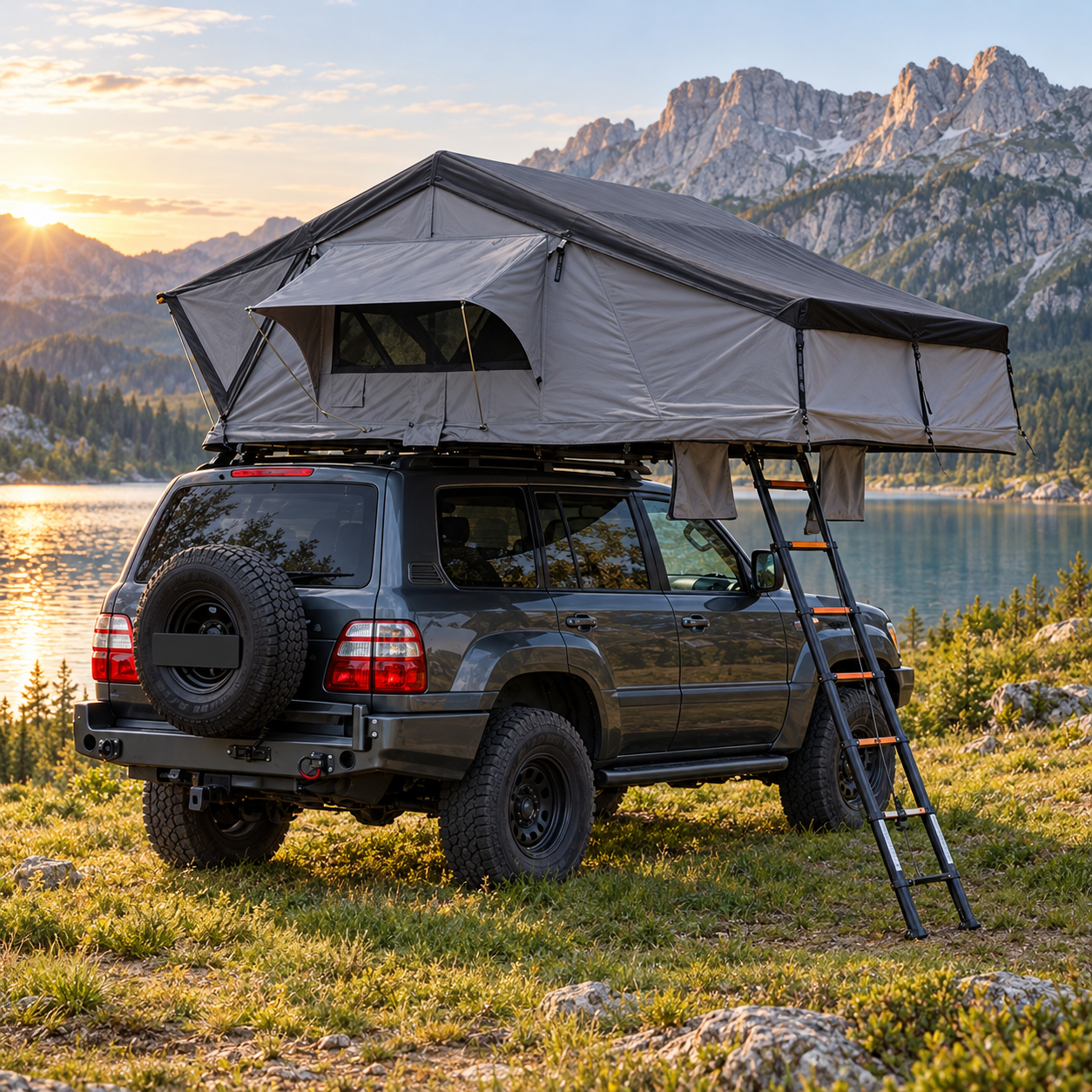
For family travel, start with the vehicle rather than the brochure. A tent that looks roomy on an SUV can still be the wrong choice if its packed weight or mounting footprint does not suit your roof and rack system. From an overlanding-gear perspective, the overlooked questions are usually fitment, usable sleeping room, and the small access details that matter after dark.
Start with the non-negotiable: vehicle and rack compatibility
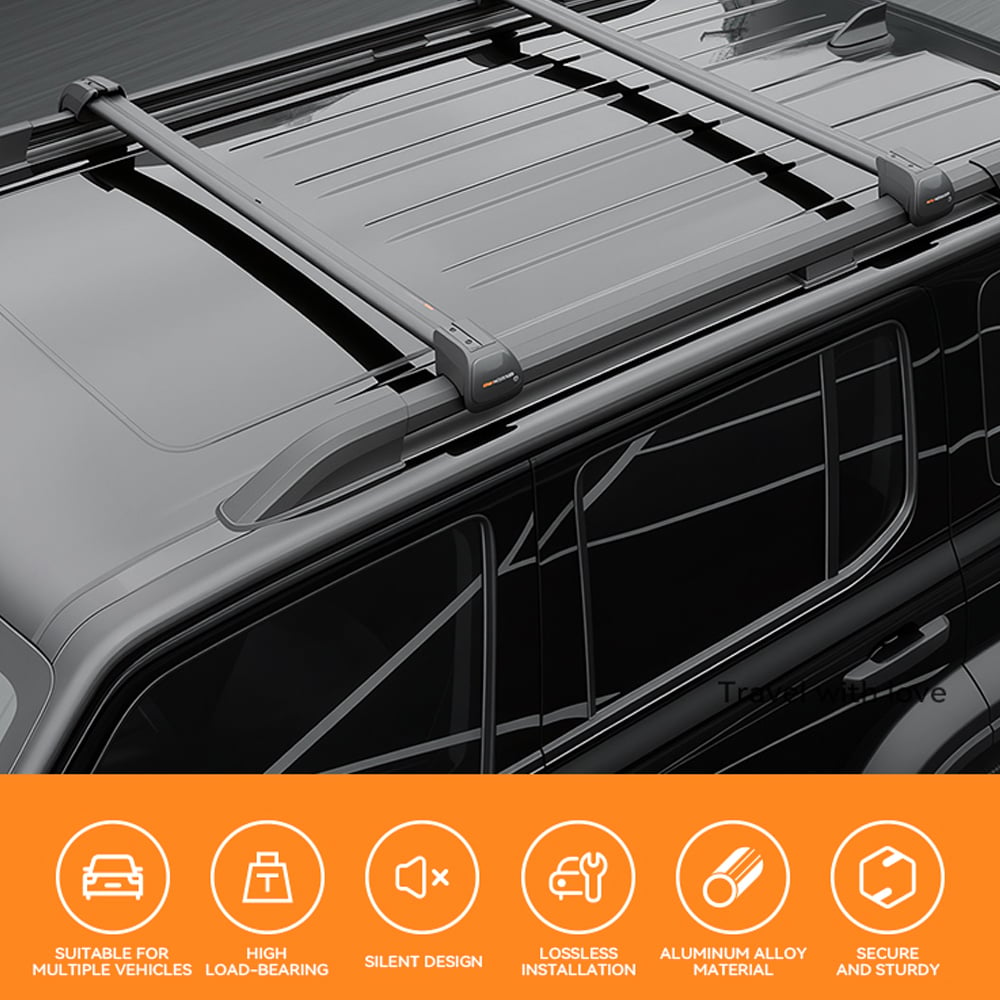
Before comparing shells, fabrics, or mattresses, confirm the dynamic roof-load rating stated by your vehicle manufacturer. That rating applies while driving and is different from the static load the vehicle may support while parked. Then check the rating, crossbar spacing, and mounting guidance for the rack itself. Your hard roof top tent must be suitable for both systems; passengers, bedding, and campsite use do not cancel the need to respect the driving limit.
A common installation mistake is assuming that any crossbar system can carry a family tent because it appears robust. Instead, document the tent’s packed mass, the rack mass where relevant, and the approved mounting arrangement before ordering. If the numbers leave little margin, a lighter hard roof top tent or a different vehicle-rack solution is the safer choice. A professional installer can be useful when manufacturer guidance is unclear.
Measure family sleeping space, not the headline capacity
“Sleeps four” is a starting point, not a family comfort guarantee. Ask for the actual mattress length and width, then consider sloped walls, wheel-well-like interior intrusions, bedding left inside during packdown, and how often children will be sharing the sleeping platform. A hard roof top tent that works for two adults and two small children may feel very different once those children grow or when wet clothing and nighttime essentials come inside.
For families planning multi-night trips, the usual feature order—capacity, price, then weight—often changes after a few outings. Easy entry, enough elbow room, ventilation, and a routine for shoes and bags can become more important than a generous-looking floor diagram. If possible, lie down in the displayed tent with the people who will use it. If that is not possible, map the dimensions at home with tape and include the mattress thickness in the comparison.
Choose the hard-shell layout around your travel rhythm
A hard roof top tent is often attractive because it can reduce setup and packdown time. That benefit is most valuable for families who move camp frequently, arrive late, or stop for only one night. However, “quick setup” should mean a repeatable sequence, not only a short demonstration. Practice opening, ladder placement, bedding management, and closing at home before a trip.
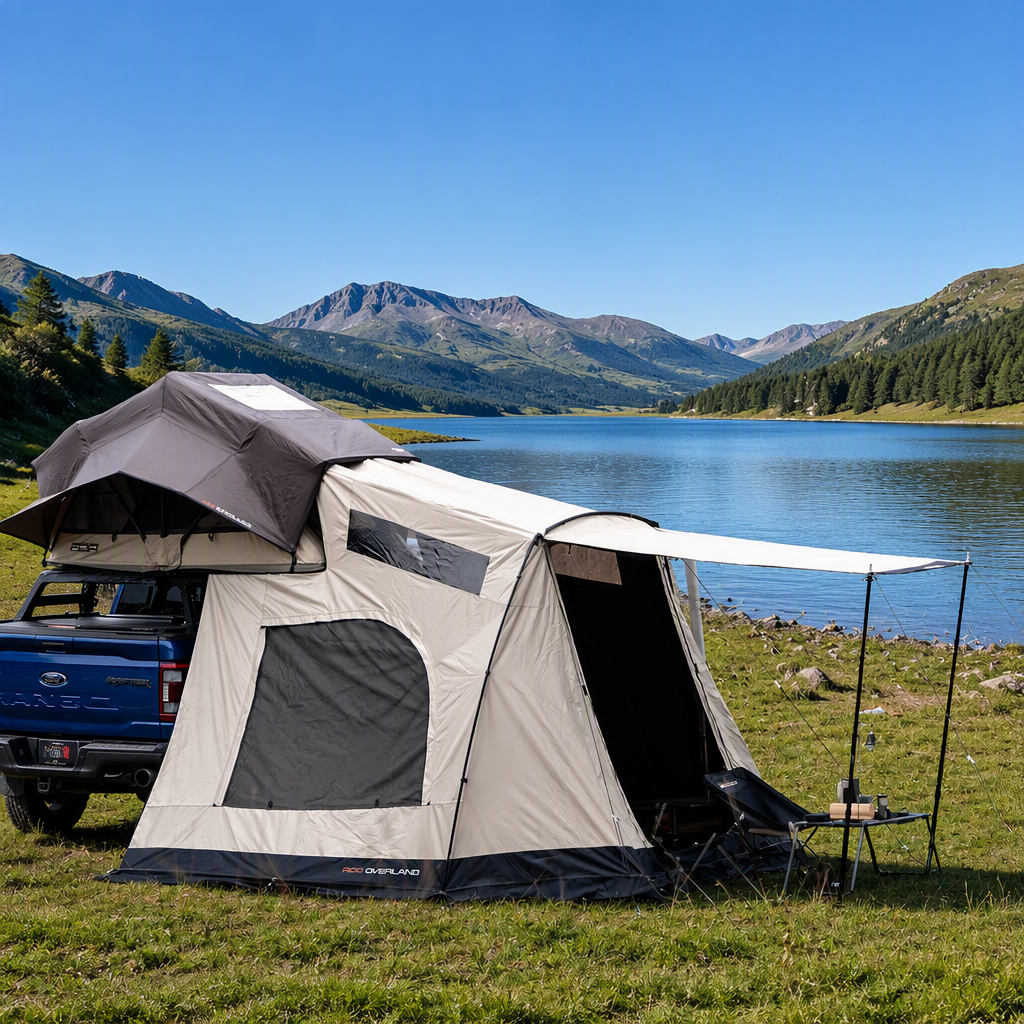
Low-profile hard-shell designs can help with road travel and clearance, while larger or extended layouts may prioritize interior room. Neither is universally better. If your priority is daily mobility, weight the folded height, mounting position, latches, and real packdown routine heavily. If your priority is longer stays with children, weight sleeping geometry, entry space, ventilation, and available camp shelter more heavily. A hard roof top tent should support the way your family actually travels, not an idealized weekend.
Check access as carefully as the sleeping platform
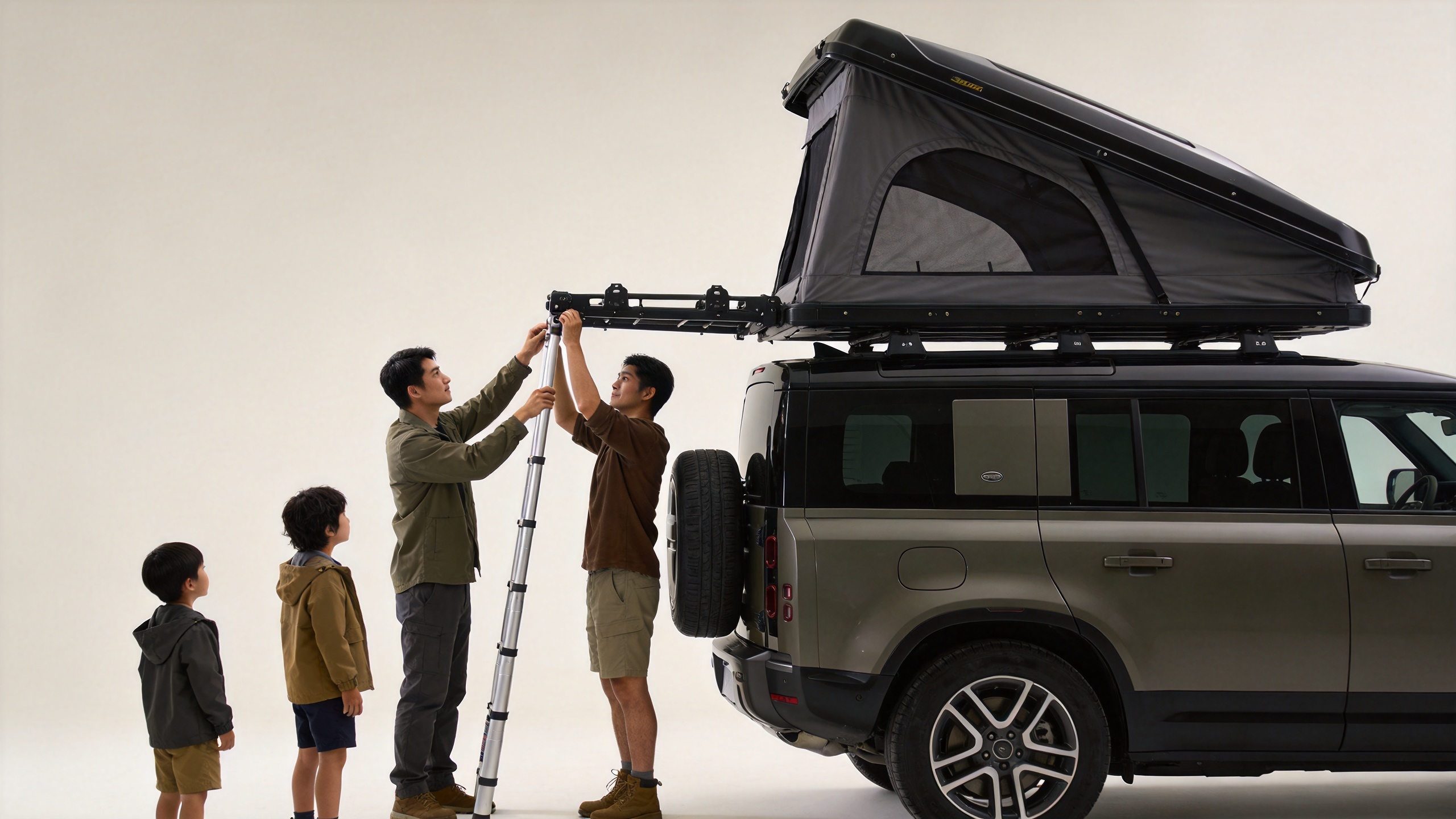
Families use the ladder more often and with less patience than a solo traveler. Look for an adjustable ladder with positive attachment, secure footing, and instructions for the angle and surface it needs. On flat, firm ground, many ladders feel straightforward. On sloped gravel, sand, or mud, achieving a stable angle can become the part of the evening that demands the most attention.
For a hard roof top tent used with children, make ladder checks part of camp setup: choose the flattest practical parking position, confirm every connection before anyone climbs, keep the ladder area clear, and supervise young children. Do not treat a ladder as a play feature or assume that an elevated sleeping position is suitable for every child. A family-friendly tent is one your adults can operate calmly and inspect every night.
Look beyond the shell at weather and ventilation details
Hard shells are commonly selected for streamlined travel and weather-oriented protection, but the shell alone does not determine overnight comfort. Ask how the fabric body, seams, windows, vents, and rain management work together. In humid or cold weather, controlled airflow matters because condensation can make bedding and walls uncomfortable even when rain stays outside.
Also compare hardware that will be cycled repeatedly: latches, hinges, gas struts, zippers, and mounting fasteners. A hard roof top tent that deploys smoothly when new still needs an ownership plan. Ask what routine inspection and maintenance are recommended, how replacement parts are handled, and whether the supplier can provide clear installation and care documentation. For longer trips, that support matters as much as an appealing feature list.
Use a family-focused buying checklist
- Fitment: Have you confirmed vehicle dynamic roof load, rack rating, crossbar layout, and mounting approval?
- Travel practicality: Does the packed weight, closed height, and closure routine suit your routes, parking, and garage?
- Usable room: Have you compared actual mattress dimensions and wall shape for your family’s current and near-future needs?
- Access: Can adults set the ladder securely on the surfaces you expect to camp on and supervise children safely?
- Weather comfort: Are ventilation, seam construction, window management, and bedding-drying routines suitable for your climate?
- Ownership support: Are installation guidance, maintenance expectations, warranty terms, and replacement-part channels clear?
Make the final choice with a real trip in mind
The right hard roof top tent for a family is rarely the one with the longest feature list. It is the one that fits the vehicle with verified margins, gives the family usable—not merely advertised—sleeping room, and can be opened, secured, and packed away reliably. Picture your first travel day: a long drive, a late arrival, children ready for bed, and uneven ground under the ladder. If the tent’s process still feels manageable, it is probably a strong candidate.
ADA OVERLAND focuses on rooftop tents and outdoor gear, with OEM/ODM capability and more than eight years of category manufacturing experience. When comparing any hard roof top tent, ask for the model-specific information needed to make a responsible decision rather than relying on generic claims. Clear fitment details, practical dimensions, and support documentation are the details that help a family turn a tent purchase into more relaxed overlanding trips.
 Hot News